2015
Muver
A taxi service ecosystem for passengers, drivers, and administrators across Android and web.
Role
UX/UI Designer
Platforms
Android, Web
Duration
2 months
Scope
UX Structure & Flows, Wireframes, UI Design, Visual Style, Prototyping, Interaction Design
About the Project
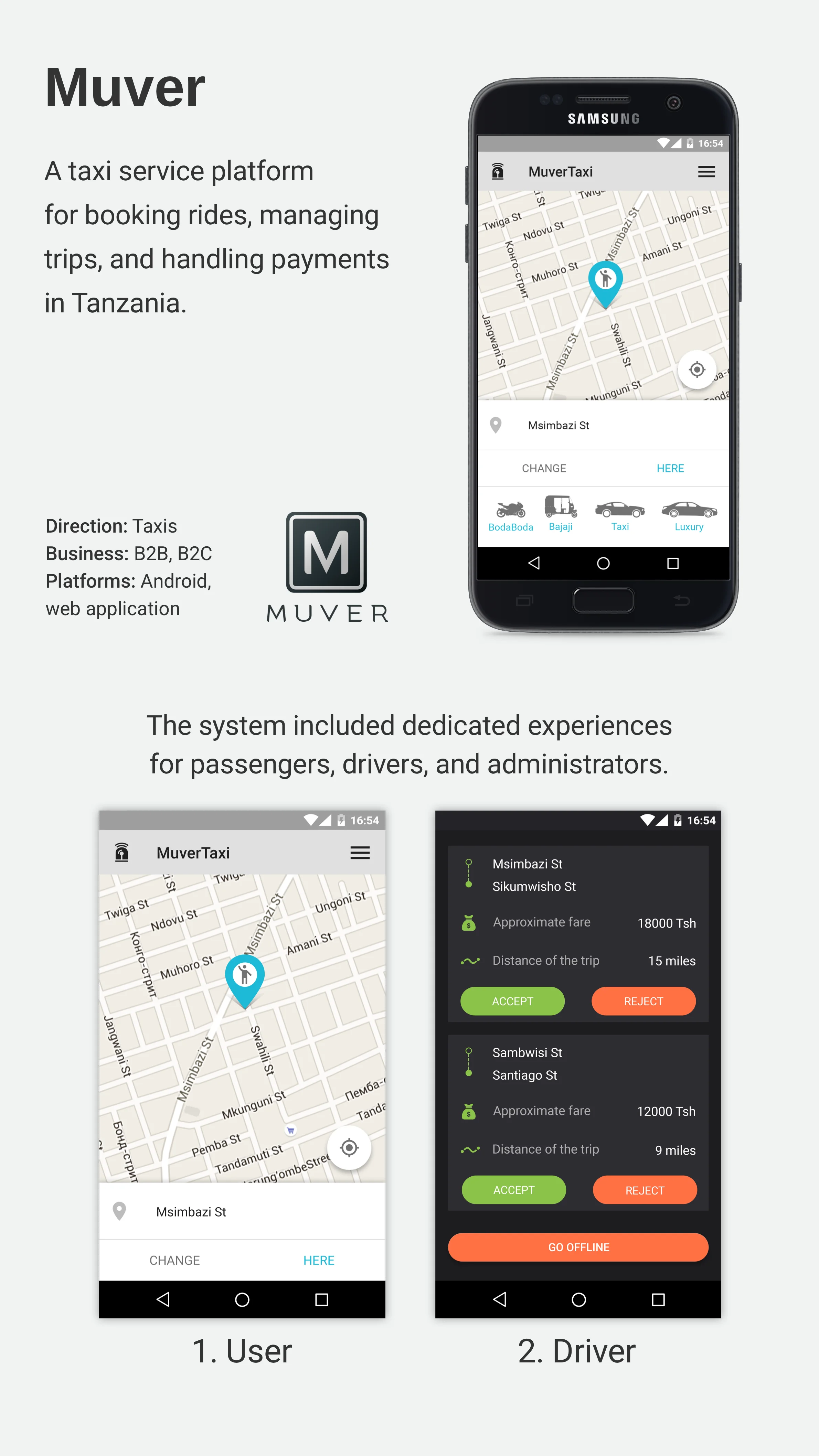
Muver was a taxi service platform designed for Tanzania, covering the complete ride workflow across passenger and driver apps together with a web administration panel. Passengers could choose a vehicle type, select a payment method, review trip details, and request a ride. Drivers could accept requests, navigate to pickup locations, manage trip states, and switch between online and offline modes. Administrators could monitor trips, drivers, passengers, and cash flow from the web interface.
Challenge
Design a connected transportation experience for three different user groups: passengers, drivers, and administrators. The system needed to support ride requests, payments, driver operations, trip states, and administrative monitoring without making the workflows feel fragmented.
Approach
I designed the UX structure and flows, wireframes, UI design, visual style, prototyping, and interaction design across the passenger app, driver app, and web administration interface. The product was organized around three connected experiences: requesting and paying for a ride, accepting and completing trips, and monitoring platform activity from the administration panel.
Outcome
The final system brought passenger booking, driver operations, trip management, payments, platform analytics, and administrative control into one connected taxi service ecosystem.
Product Overview
A connected taxi service
Muver was designed as a complete taxi service covering passenger booking, driver operations, and web administration. The system connected ride requests, vehicle selection, payments, trip execution, and platform monitoring across multiple interfaces.
Passenger Experience
Booking a ride
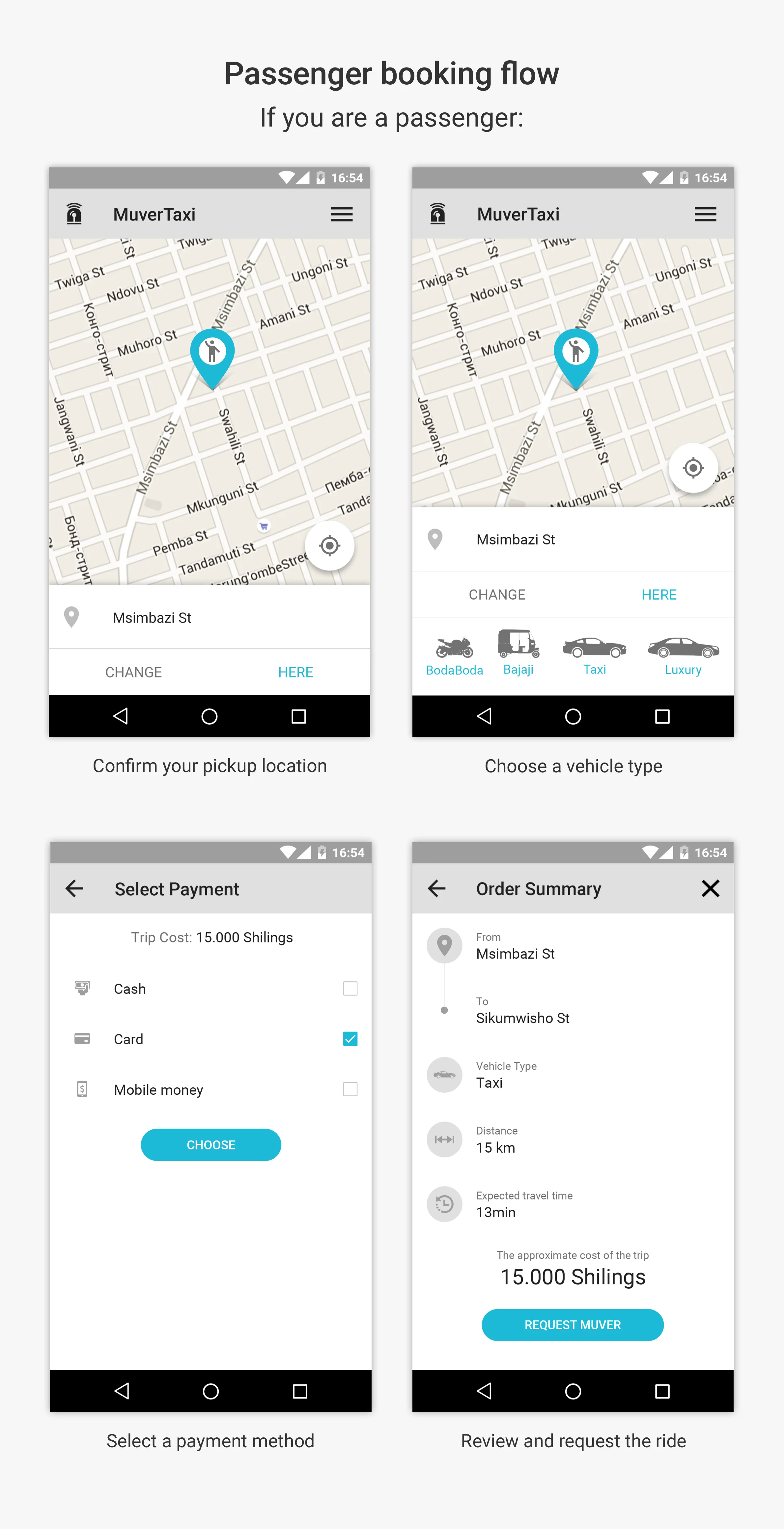
Passengers could confirm or adjust their pickup location, choose a vehicle type, select a payment method, and review the trip before requesting a driver. The flow kept the main booking decisions within a short sequence of steps.
Driver Experience
From ride request to trip
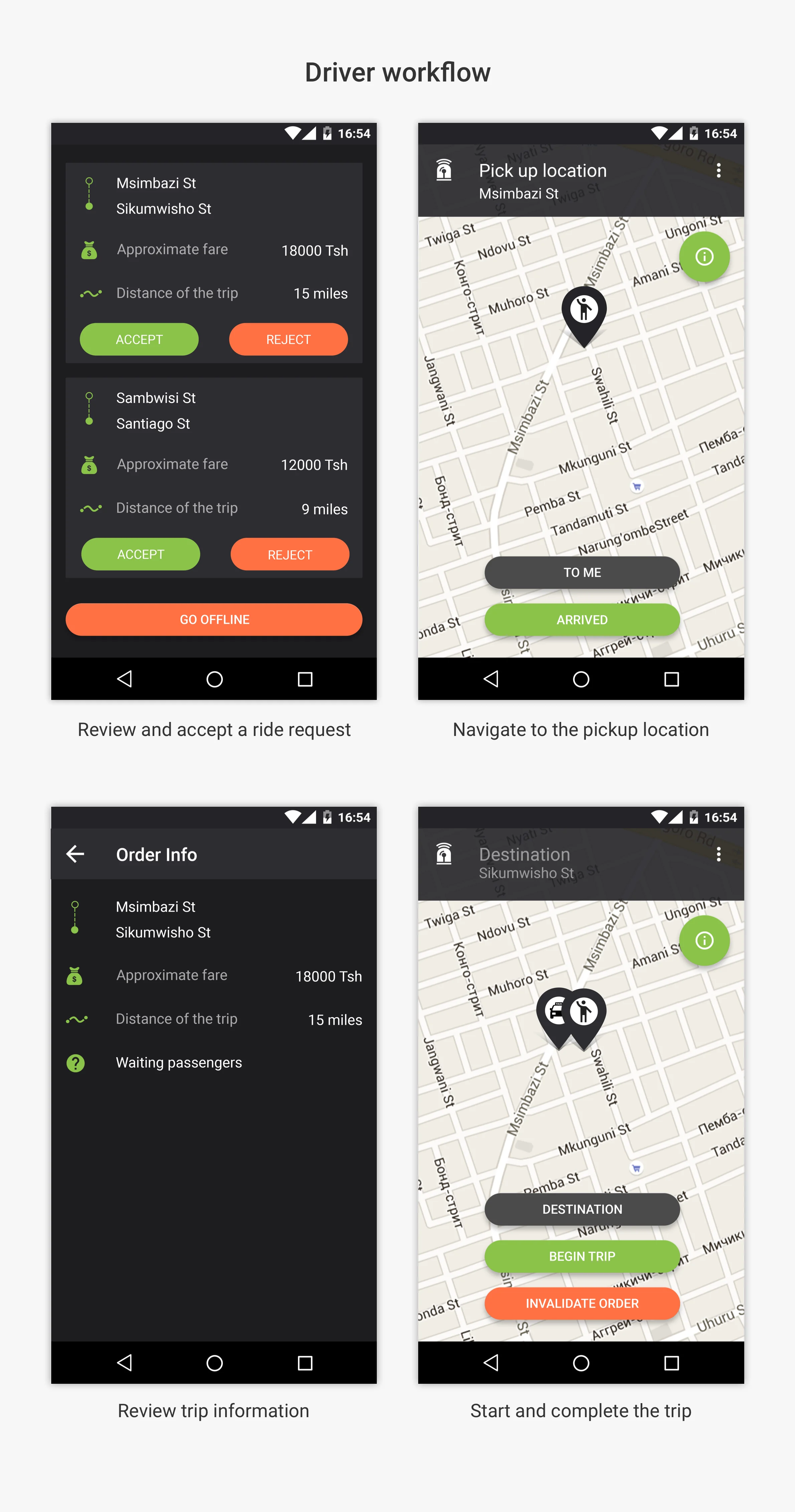
Drivers could review incoming requests, compare fare and distance information, accept or reject trips, navigate to the passenger, and progress through the ride. Trip details remained available throughout the process so the driver could verify the request before starting the journey.
Administration
Monitoring platform activity
The web administration interface provided access to trip records and operational data. Administrators could review ride details, timing, fares, commissions, drivers, passengers, and other trip-related information, with filtering available for larger datasets.
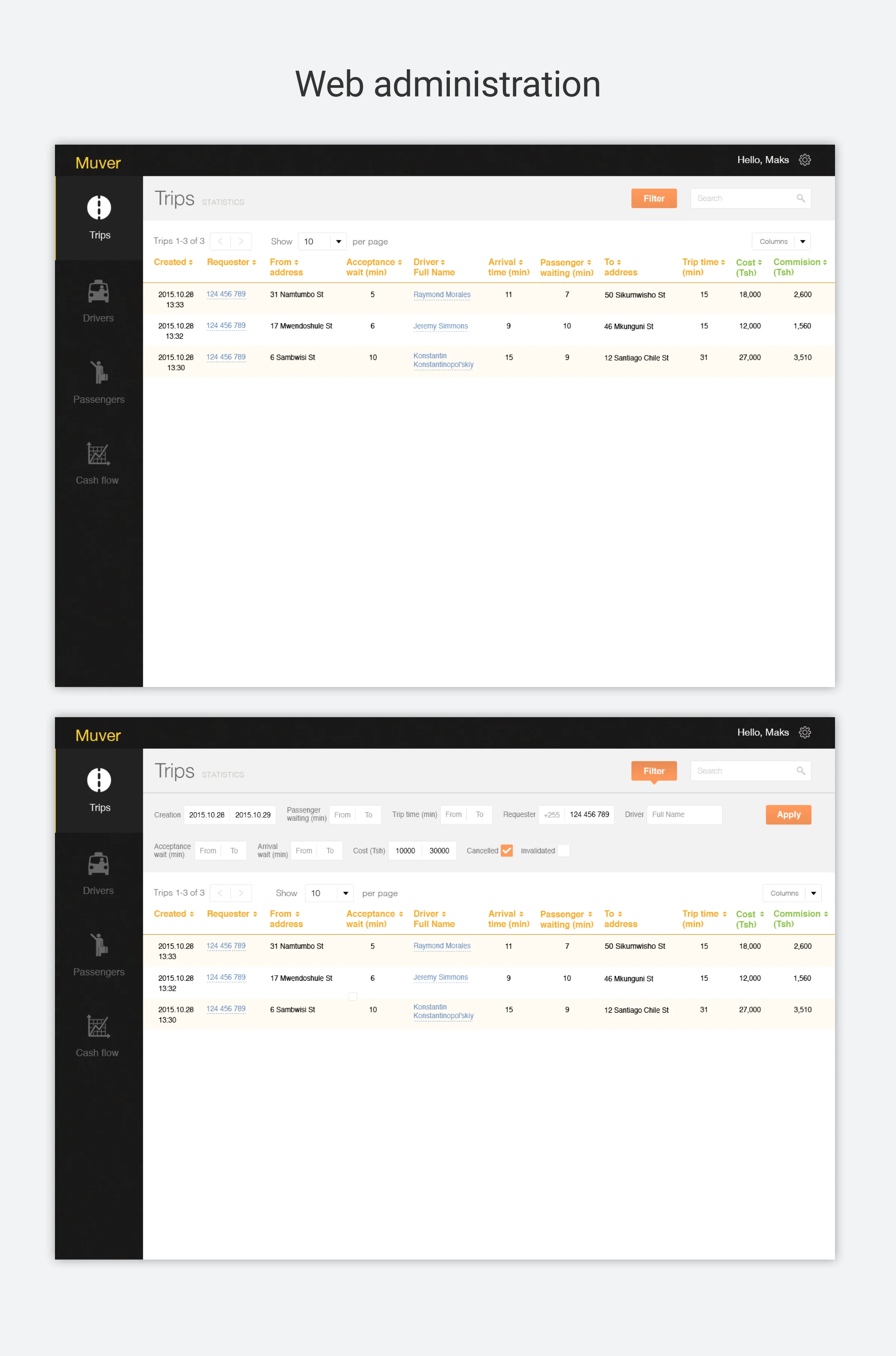
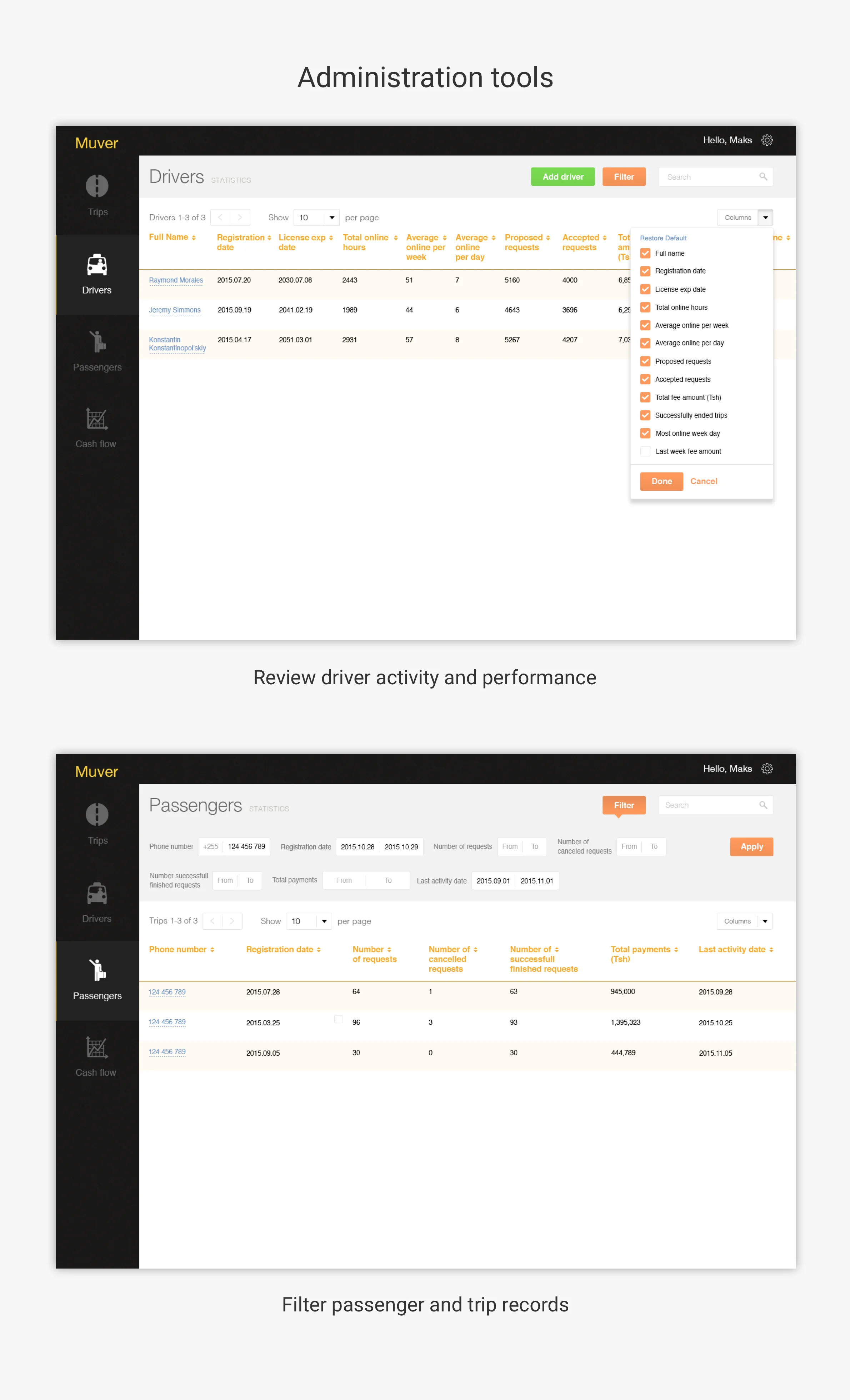
Administration tools for reviewing driver and passenger activity, filtering records, and managing operational data.
Analytics
Operational and financial visibility
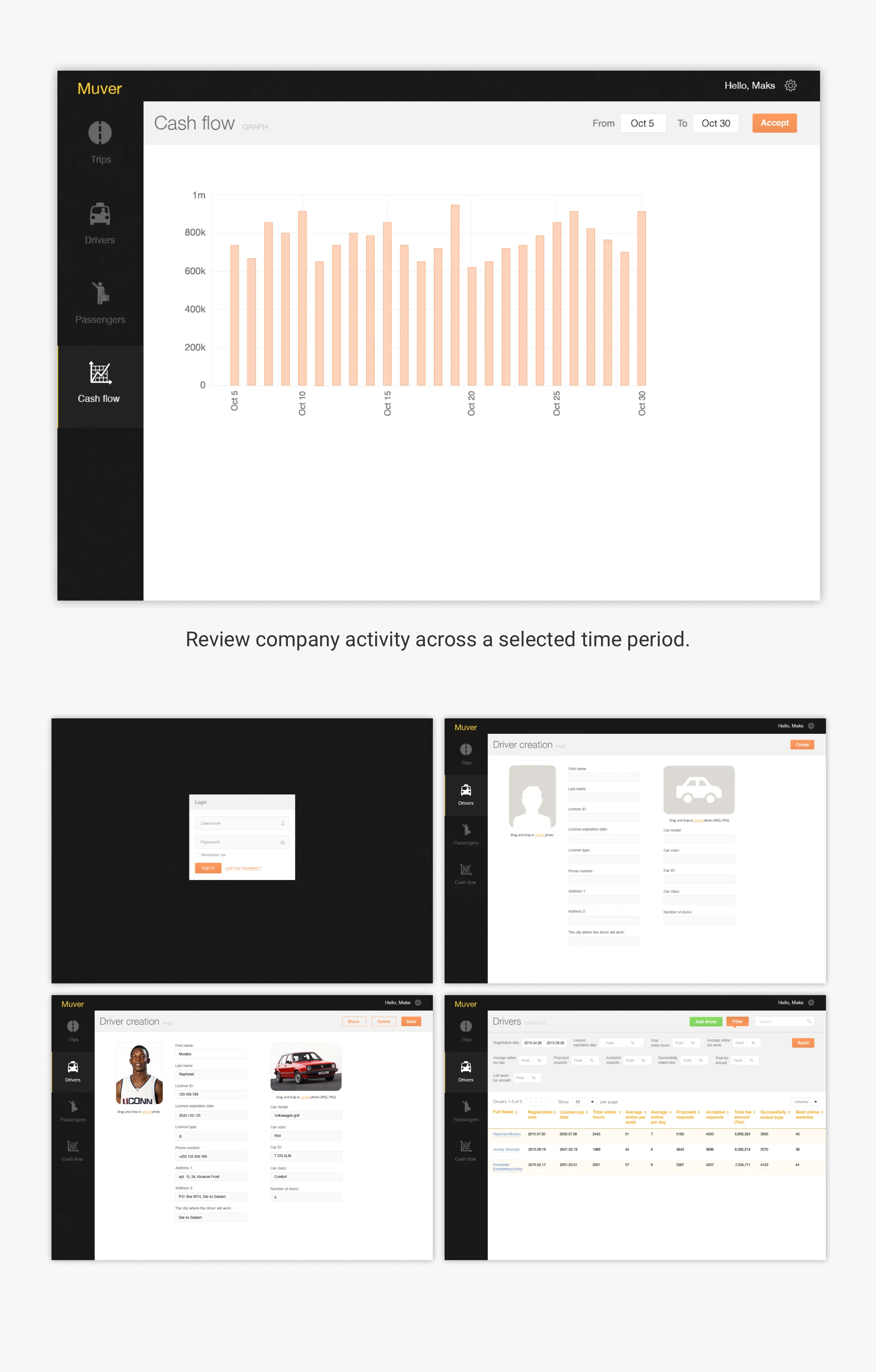
The administration panel also included cash flow visualization and driver management. Administrators could review financial activity over a selected time range and manage driver records from the same web interface.
Operational States
Designed for active driving conditions
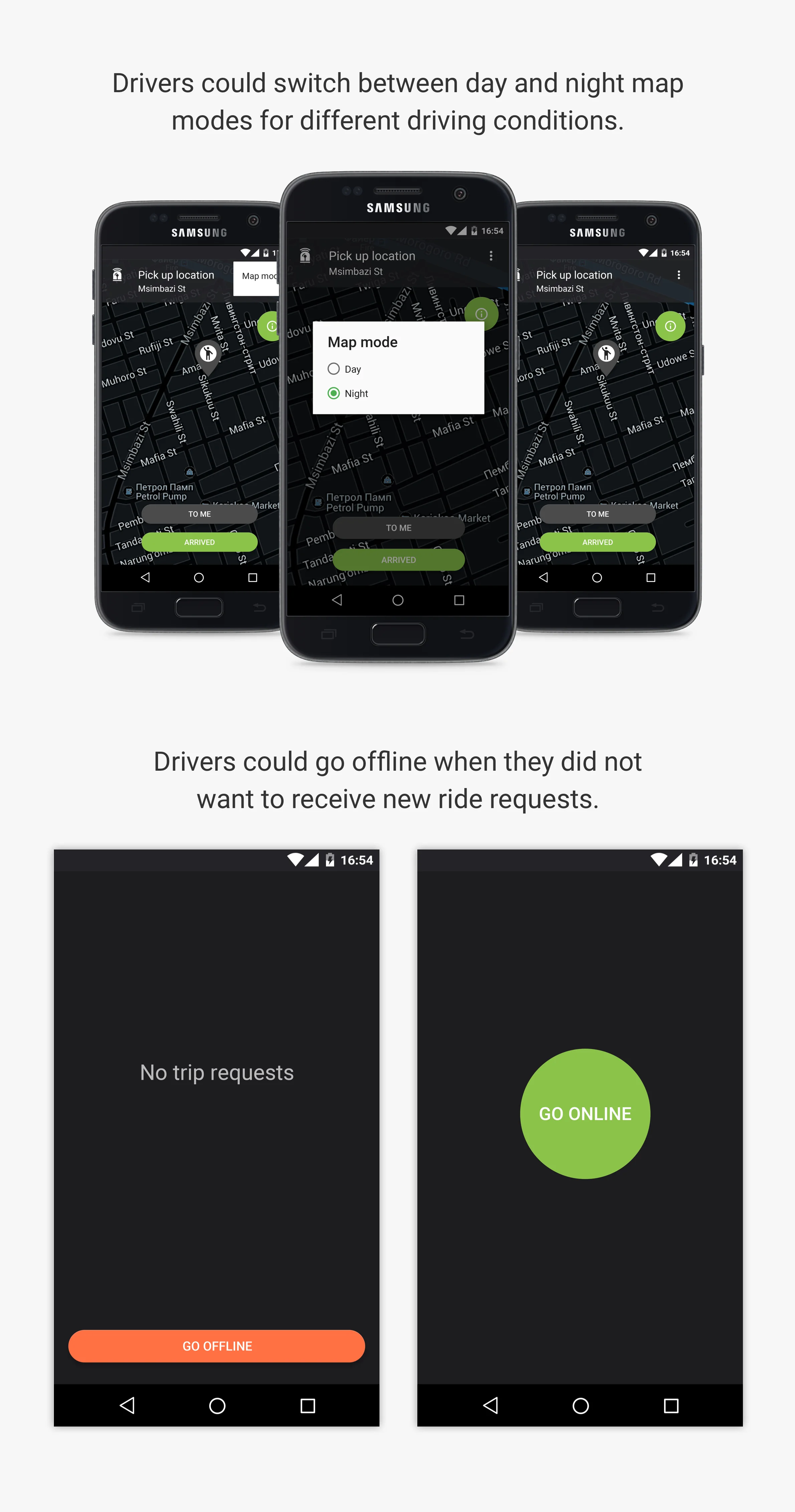
The driver experience supported day and night map modes for different driving conditions. Drivers could also switch between online and offline states to control whether they were available to receive new ride requests.
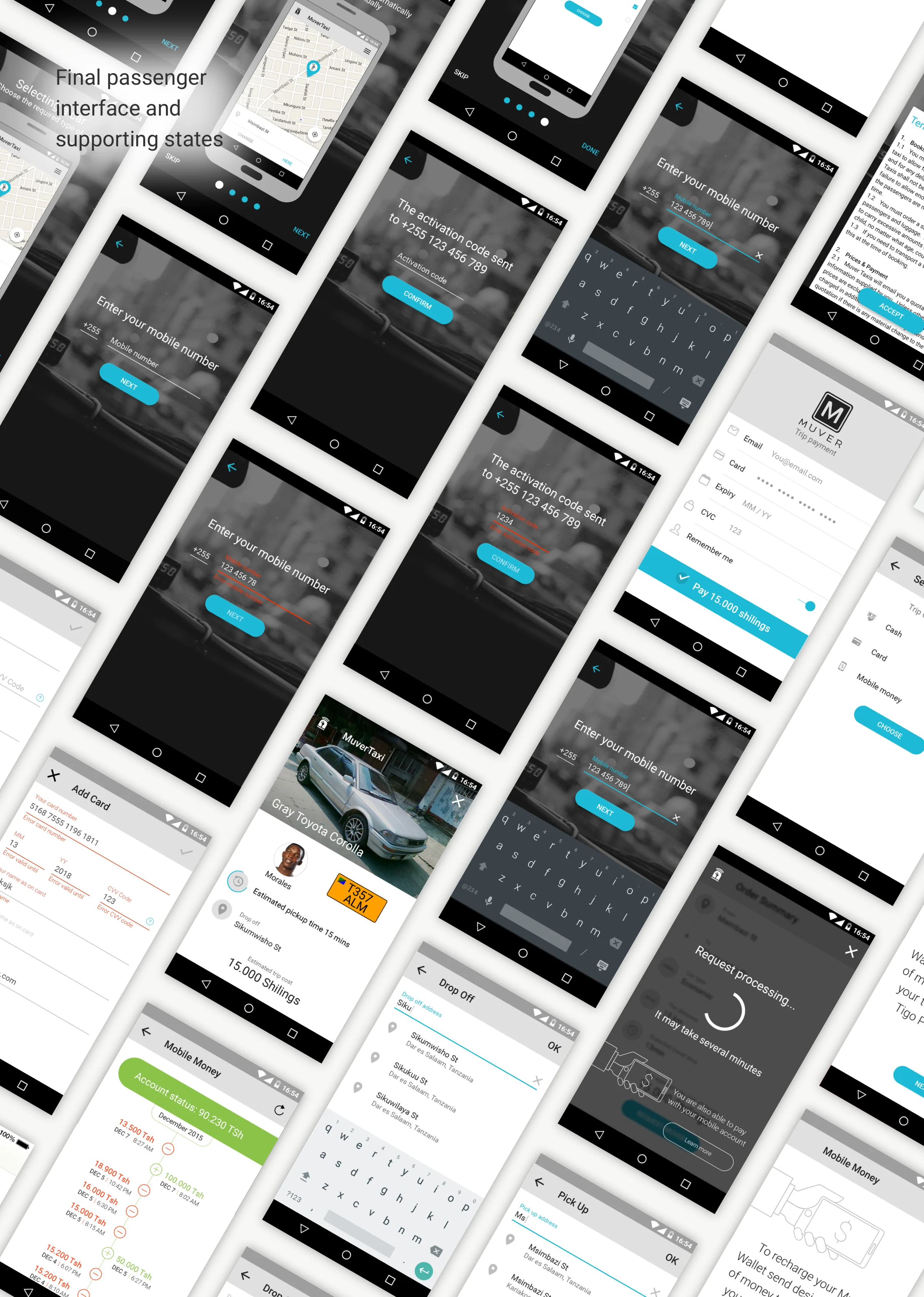
Final passenger interface covering onboarding, phone verification, payments, ride requests, pickup and drop-off, trip processing, and mobile money.
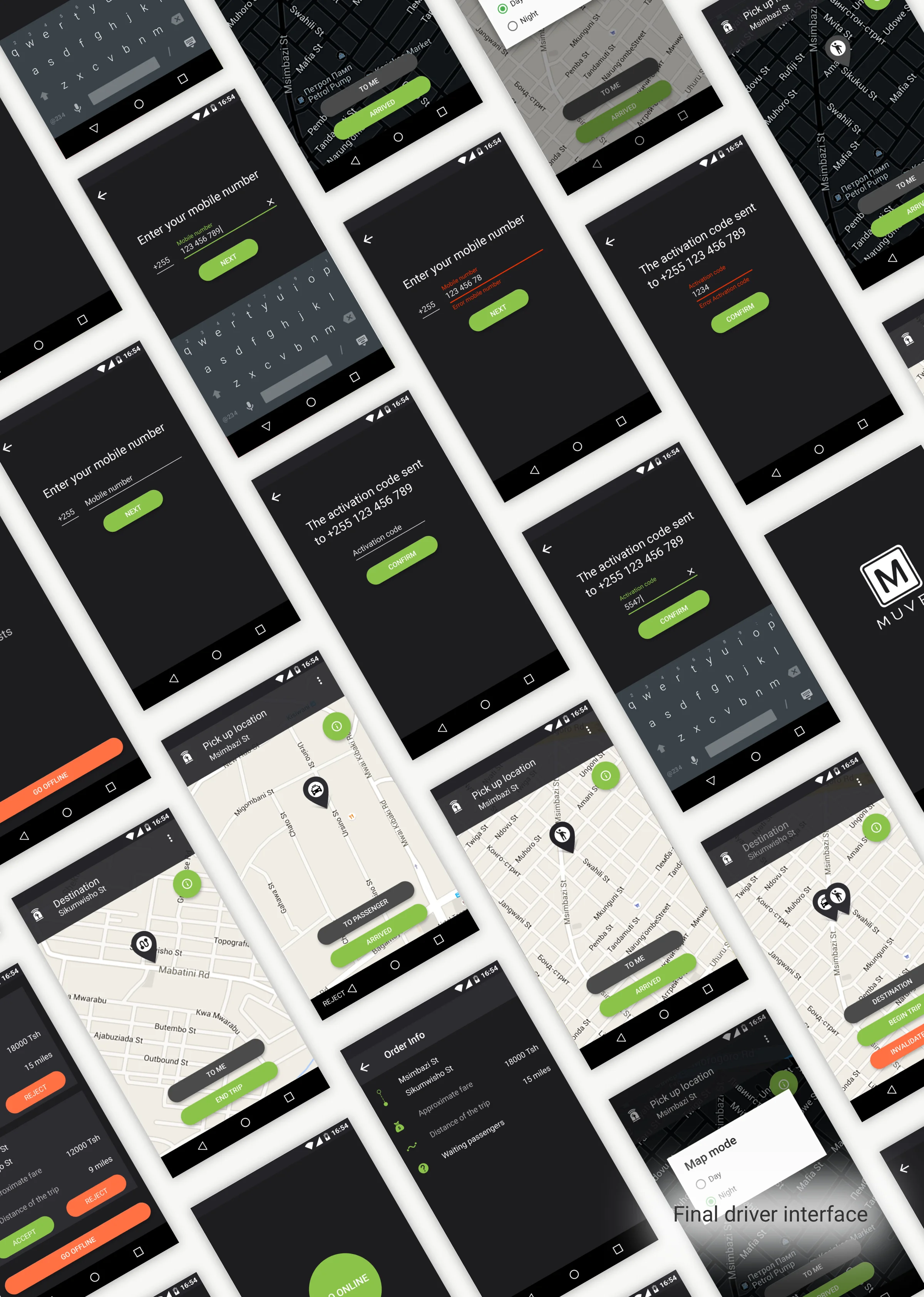
Final driver interface covering activation, availability, ride requests, trip details, map states, pickup, destination, and online/offline controls.