2014
Secretland
A social iPhone app built around anonymous thoughts, mutual likes, and private conversations.
Role
UX/UI Designer
Platforms
iPhone
Duration
10 days
Scope
UX Structure & Flows, UI Design, Visual Style, Interaction Design
About the Project
Secretland was a social iPhone app designed around sharing anonymous thoughts and discovering people with similar ideas. Users could publish a “secret,” browse thoughts from others, and Like the ones that resonated with them. When two users mutually liked each other’s thoughts, the app opened a private chat between them. The experience also included onboarding, tags, messaging, attachments, and contextual home screens that changed throughout the day.
Challenge
Create a social experience where users could share personal thoughts anonymously while still providing a clear path toward meaningful one-to-one communication. The product needed to make an unconventional interaction model — publish, discover, Like, match, then chat — understandable without making the interface feel complex.
Approach
I worked on the UX structure, user flows, wireframes, UI design, visual style, prototyping, and interaction design for the iPhone experience. The interface was organized around a small number of core actions: creating a secret, discovering thoughts from other users, expressing interest through Likes, and starting conversations after a mutual match.
Outcome
Secretland was developed as a real client product and released for iPhone in 2014. The final product included the complete experience from authorization and onboarding through secret creation, discovery, matching, and private messaging.
Product Overview
Sharing thoughts anonymously
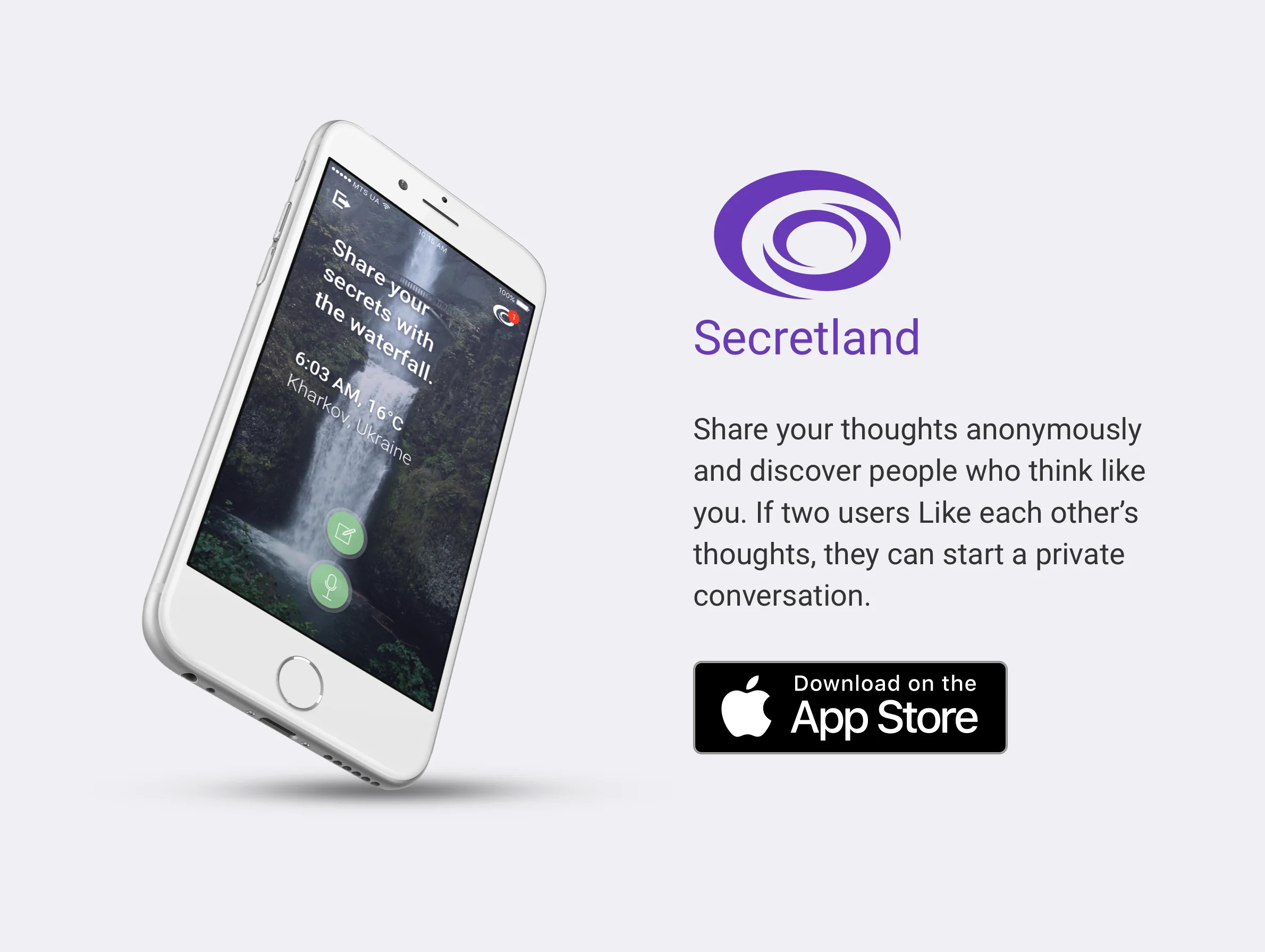
Secretland was built around a simple idea: share a thought anonymously and discover whether it resonates with someone else. Users could publish secrets, browse thoughts from other people, and Like the ones they connected with. A private conversation became available when interest was mutual.
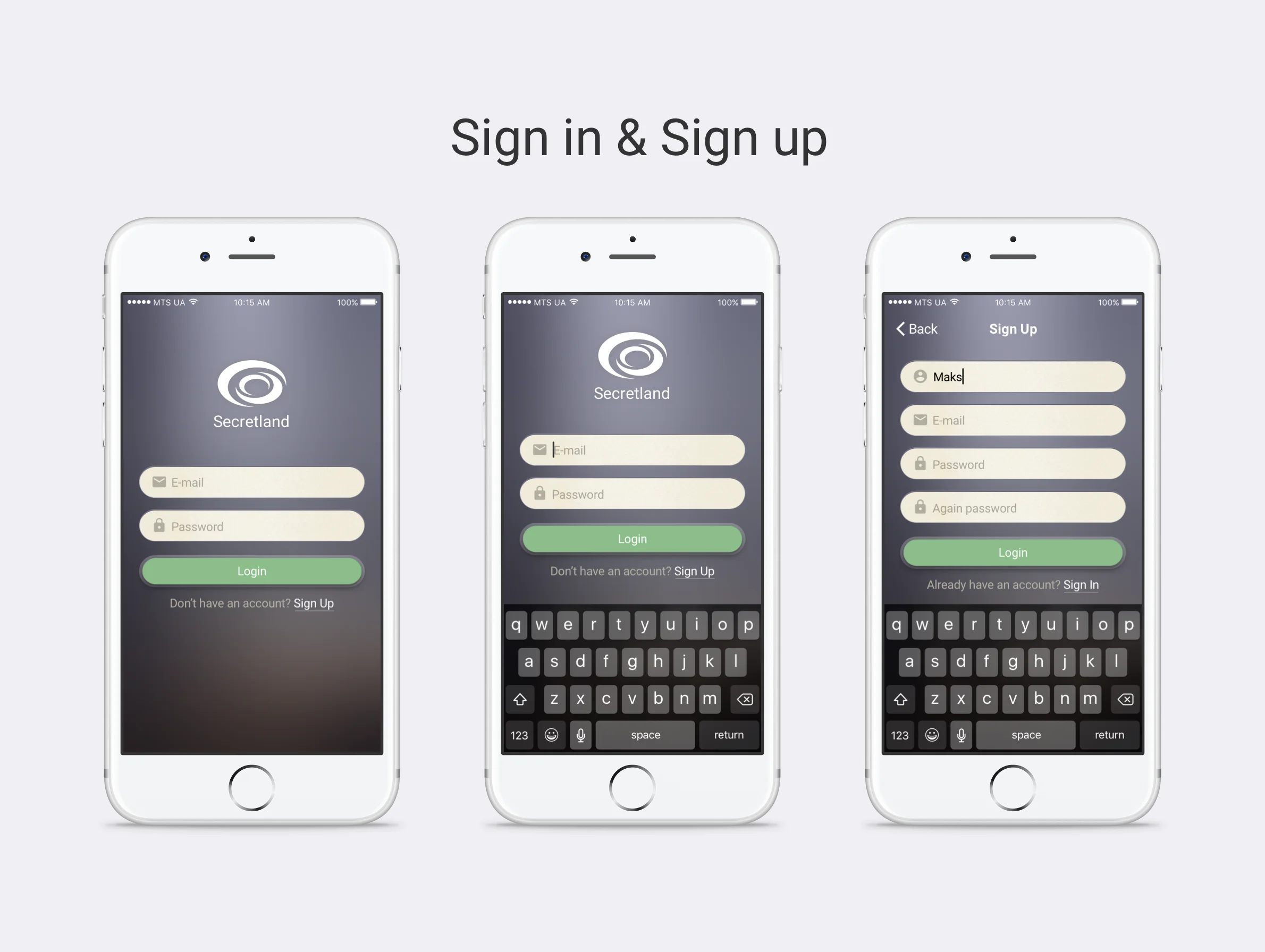
Sign in and account creation flows for the iPhone app.
Onboarding
Introducing the interaction model
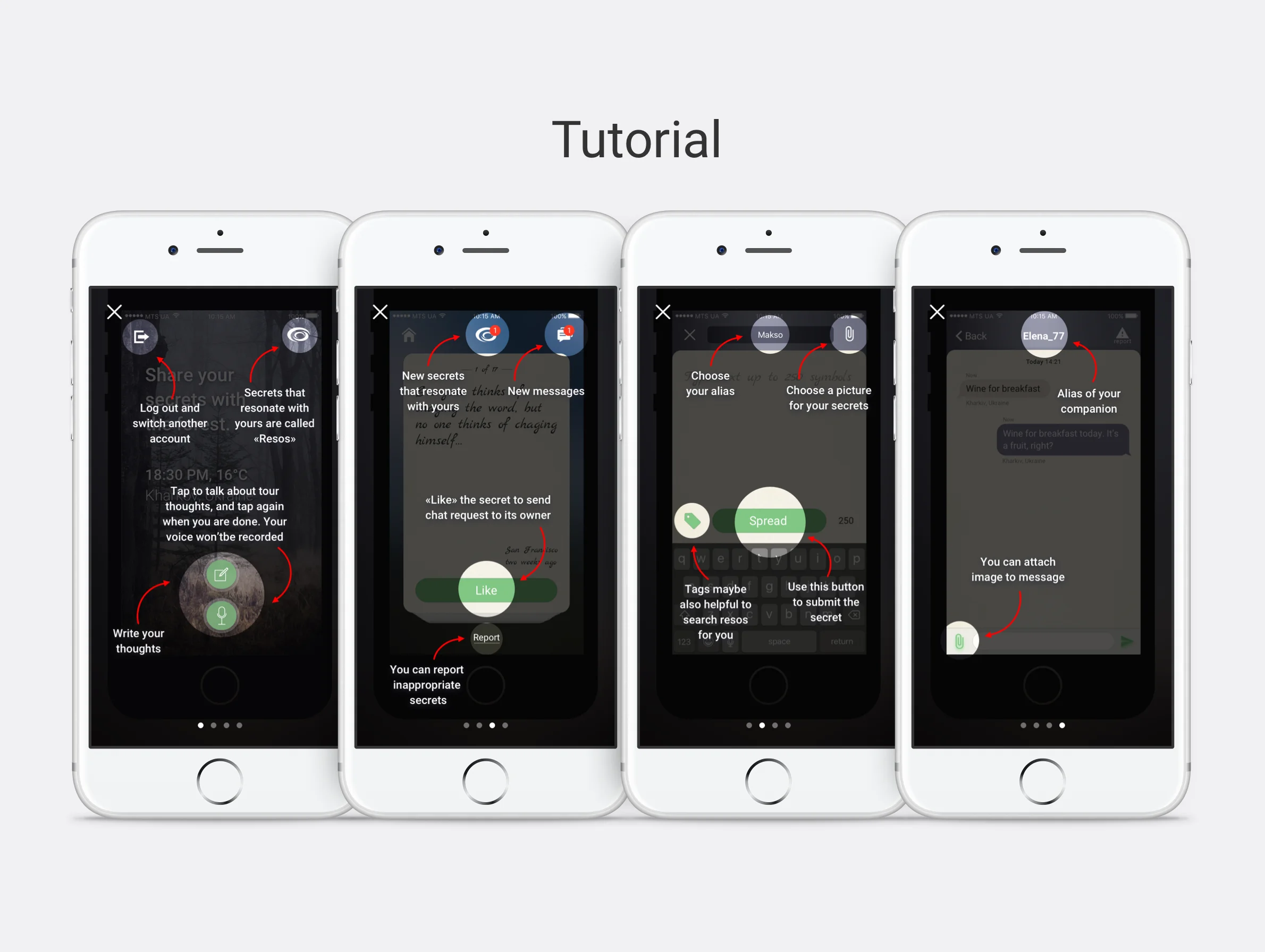
Because the product used an unusual interaction model, the onboarding introduced the main actions directly inside the interface. The tutorial explained how to create secrets, Like thoughts from other users, receive messages, choose an alias, attach images, and report inappropriate content.
Core Interaction
Creating a secret
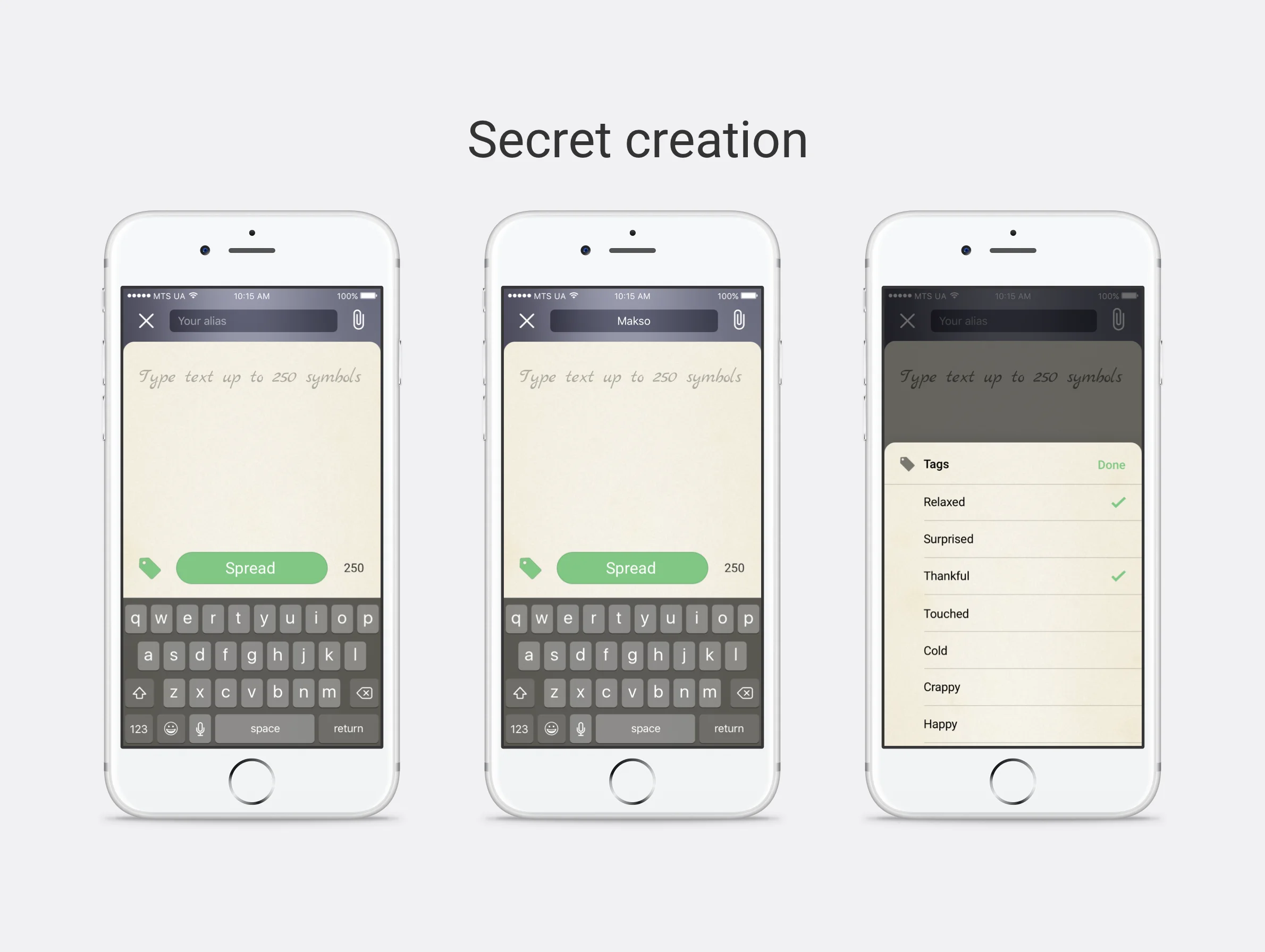
Users could write a short anonymous thought, choose an alias, assign tags, and publish it for others to discover. Tags provided additional context around the mood or meaning of each secret.
Discovery
Discovering similar thoughts
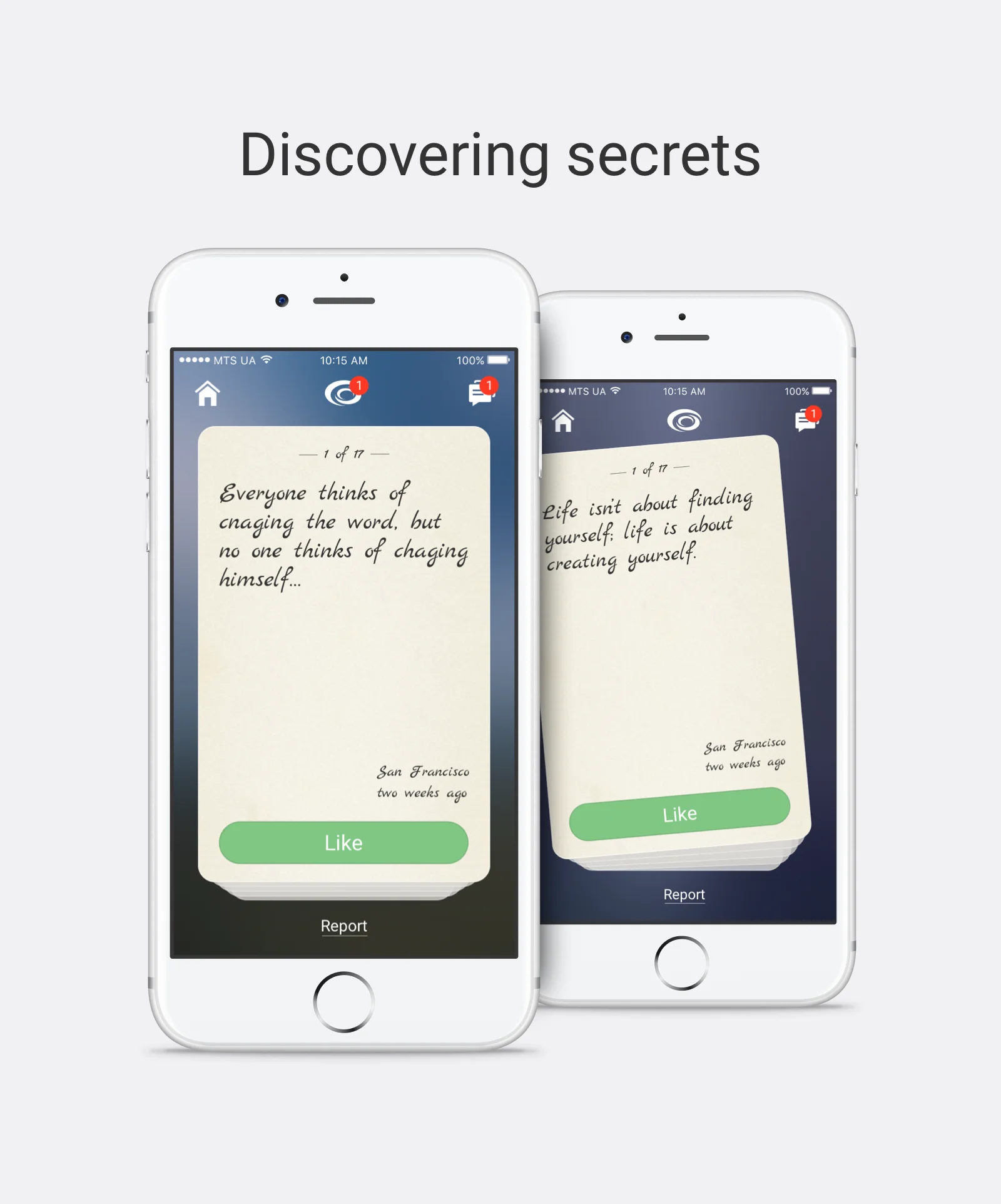
Secrets were presented as individual cards that users could browse and Like. The original product concept also referenced third-party text-analysis services as part of the system for interpreting and matching content.
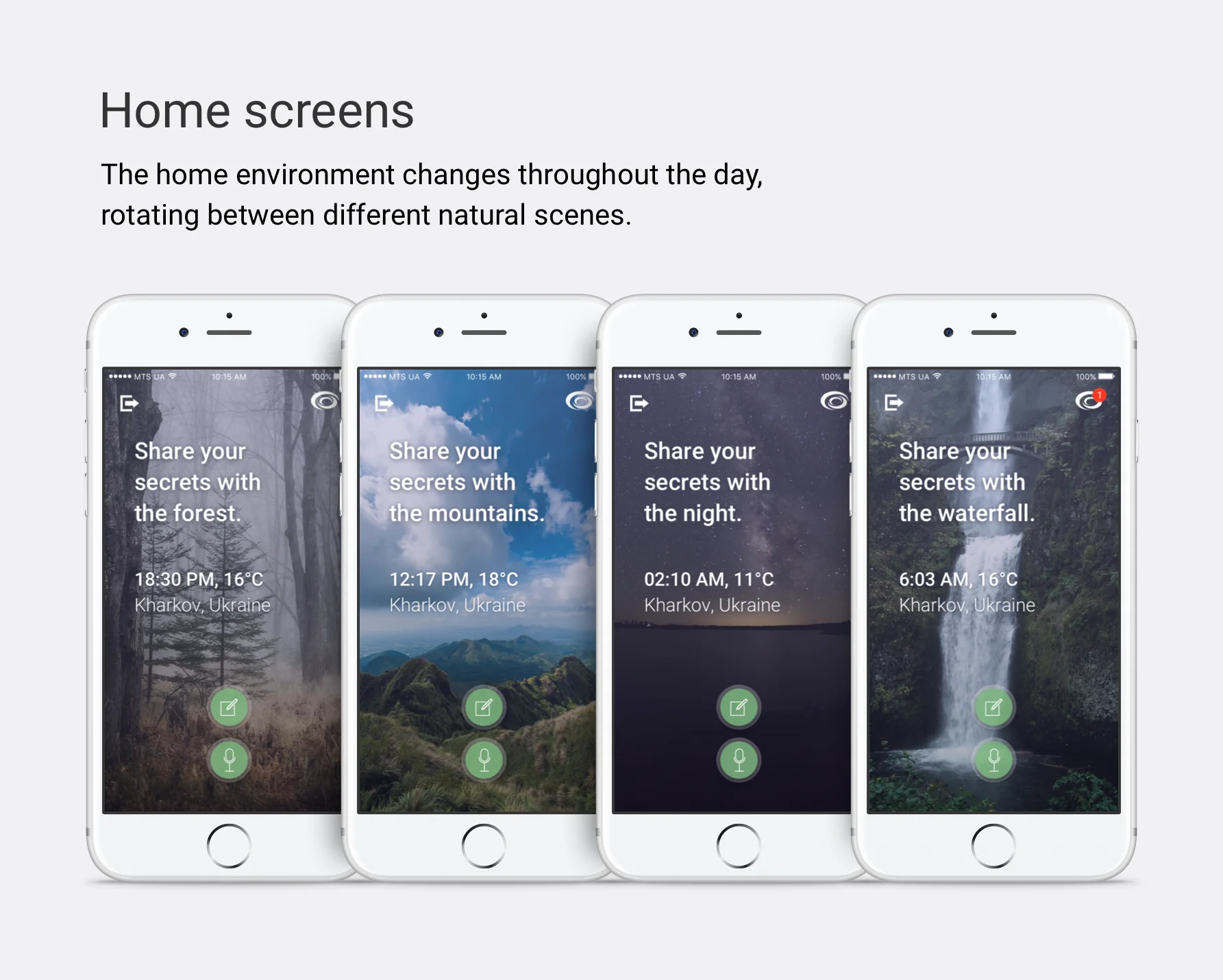
Home screens changed between natural environments depending on the time of day.
Messaging
From mutual interest to conversation
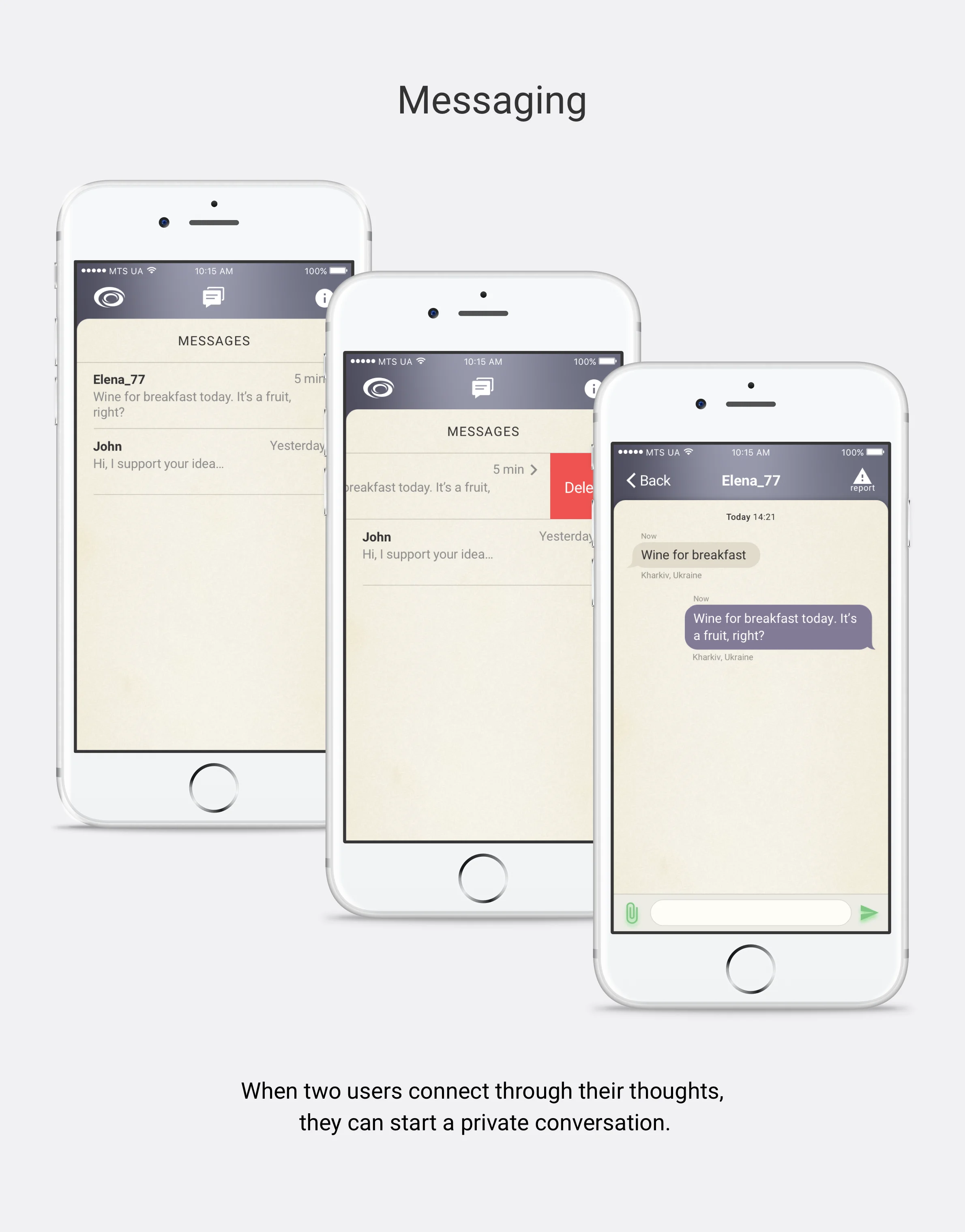
Private messaging became available when two users mutually connected through their thoughts. The messaging experience supported conversation history, message deletion, attachments, and reporting.
Outcome
Released for iPhone
Secretland was developed as a real client product and released on November 5, 2014.
The project covered the full mobile experience from onboarding and content creation through discovery, matching, and private communication.